
ADT Security System Review: 2026 Test Results and Expert Recommendations
We tested ADT Pro Install. Our experts found ADT’s monitoring dependable, with Google Nest integrations adding advanced smart features.
 &
&
 Last Updated on Sep 21, 2026

What We Like
- Highly reliable professional monitoring: In our testing, ADT maintained protection during simulated outages. Monitoring responses averaged around 20 seconds.
- Advanced features through Google Nest integration: Google Nest cameras add AI-powered detection, facial recognition, and video verification that meaningfully enhance ADT’s core security system.
- Well-designed mobile experience: The ADT+ app effectively consolidates system control, access to Google Nest cameras, and home automation into a single interface.
What We Don't Like
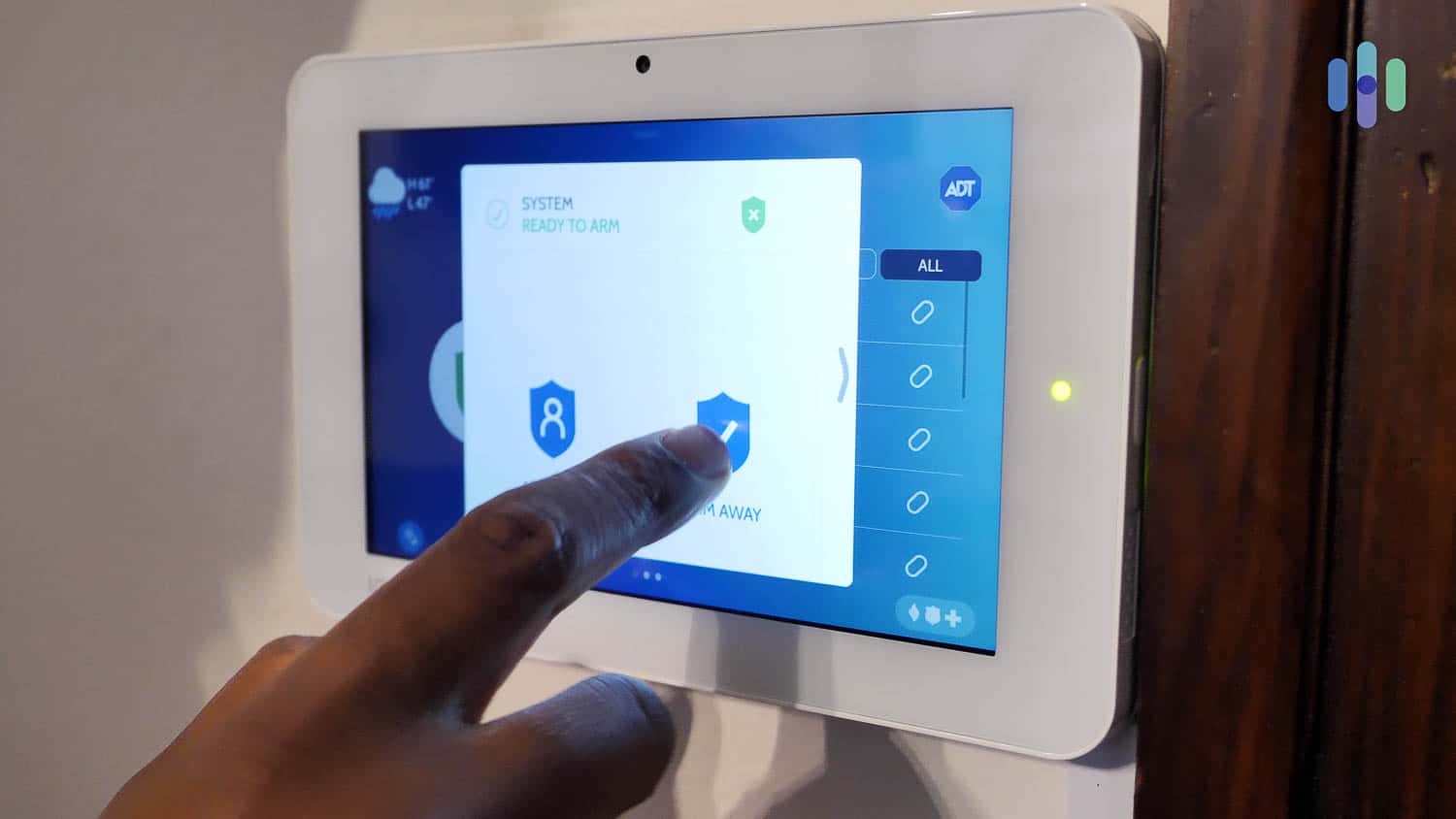
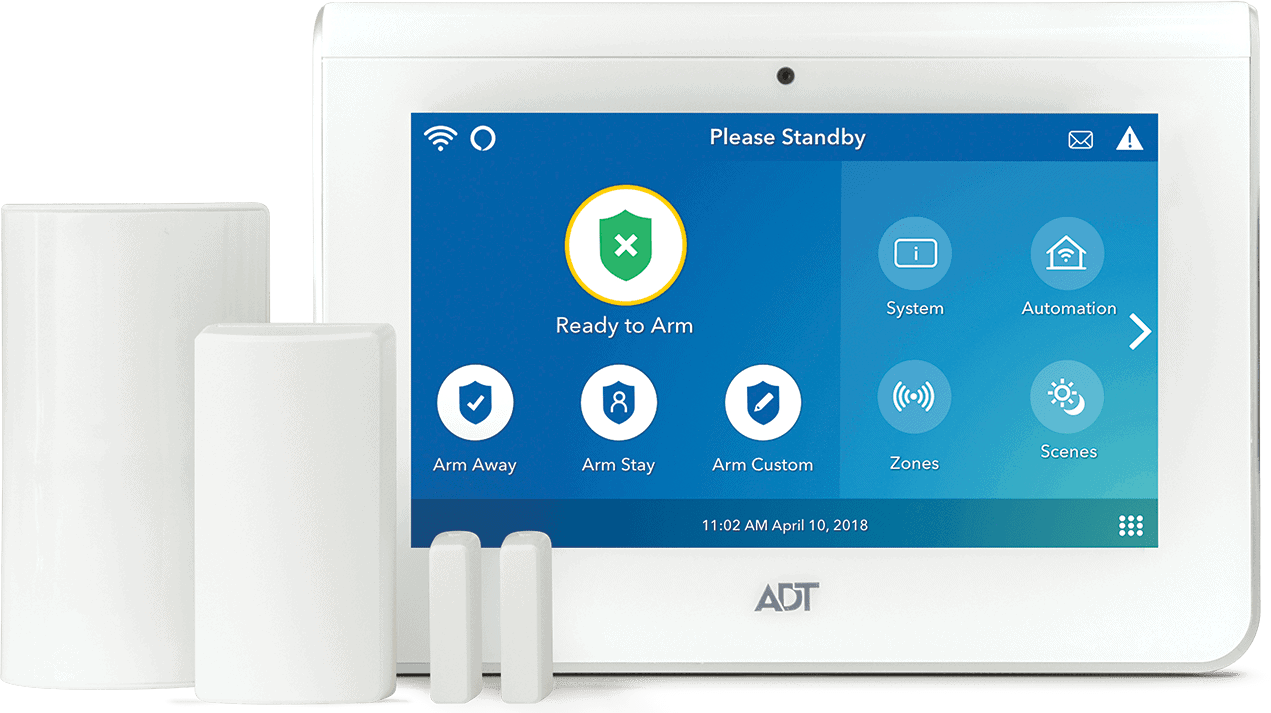
- No touchscreen control panel: The base station lacks a screen, requiring users to rely on the mobile app for camera views, automations, and advanced controls.
- Limited flexibility compared to DIY systems: ADT offers fewer monitoring plan options, and key features like video support and cloud storage require the most expensive plan.
- Less customization for power users: Automation and device control are solid, but not as granular or open-ended as some DIY-first platforms.
Bottom Line
the security.brief
ADT excels with strong Google Nest integration and features like Trusted Neighbor. While prices are lowered, it lacks a touchscreen keypad and flexibility.
ADT has long been considered one of the best home security systems, but a lot has changed in recent years. ADT has been adjusting its pricing and equipment, and they now even partner with Google Nest to give ADT users access to Google Nest Cams.
To see how well ADT’s latest flagship security system — ADT Pro Install — holds up against top market competitors, our experts spent six months putting the security system through its paces. We evaluated 47 different metrics, including usability, reliability, smart home features, and professional monitoring response times. This review breaks down what ADT does well, where it comes up short, and how it stacks up against other leading security systems available today.
Did You Know: ADT Pro Install is ADT’s main line of security systems, which requires professional installation and monitoring. There is also a DIY platform, called ADT Blu. However, this line offers different security cameras and prices, positioned as a more flexible and affordable alternative to ADT Pro Install. This review is all about ADT Pro Install.
What Our Experts Say About ADT
Following our standard scoring system, we calculated an overall SecurityScore of 9.8 out of 10 for ADT. That is after we took into account factors like equipment, pricing, features, monitoring service, and customer service. So far, ADT holds the highest SecurityScore rating among all security systems we’ve tested.
One of the primary reasons is ADT’s reliability. As part of our review process, we ran multiple real-world scenarios to test ADT’s equipment and monitoring. During our testing, ADT continued to protect our home during simulated power and internet outages, and the professional monitoring response times averaged around 20 seconds.
Of course, no security system is perfect; not even ADT. While we gave it a very high rating, there are a few downsides we’ll share below that you should watch out for.
Key Features
| Control panel | ADT Base |
|---|---|
| Wireless controllers | Keychain remote, ADT+ app |
| Indoor camera | Google Nest Cam Indoor (wired) or Nest Cam (battery) |
| Outdoor camera | Google Nest Cam (battery), Google Nest Cam Outdoor (wired), or Nest Cam with floodlight |
| Video doorbell | Google Nest Doorbell (battery) or Google Nest Doorbell (wired) |
ADT Home Security System Overview
ADT has come a long way since its American District Telegraph days. It’s not just the company that changed either. Its security systems also evolved so much over the years. Currently, for example, ADT security cameras are now from Google Nest, one of the top security camera brands today.
ADT operates six monitoring centers across North America — that’s more than most competitors. For comparison, Vivint runs two and SimpliSafe outsources monitoring to a third party. Having six centers means if one goes down, another picks up the slack without missing a beat. That kind of redundancy is a big part of why ADT consistently ranks as one of the most reliable home security systems available.
Our ADT Video Review
Before diving into our full review, watch our ADT video where our home security and security camera expert, Corey Birnstengel, breaks down ADT’s equipment and features. He also shows how the system works on a daily basis and demonstrates the ADT+ app.
Components of the ADT Security System
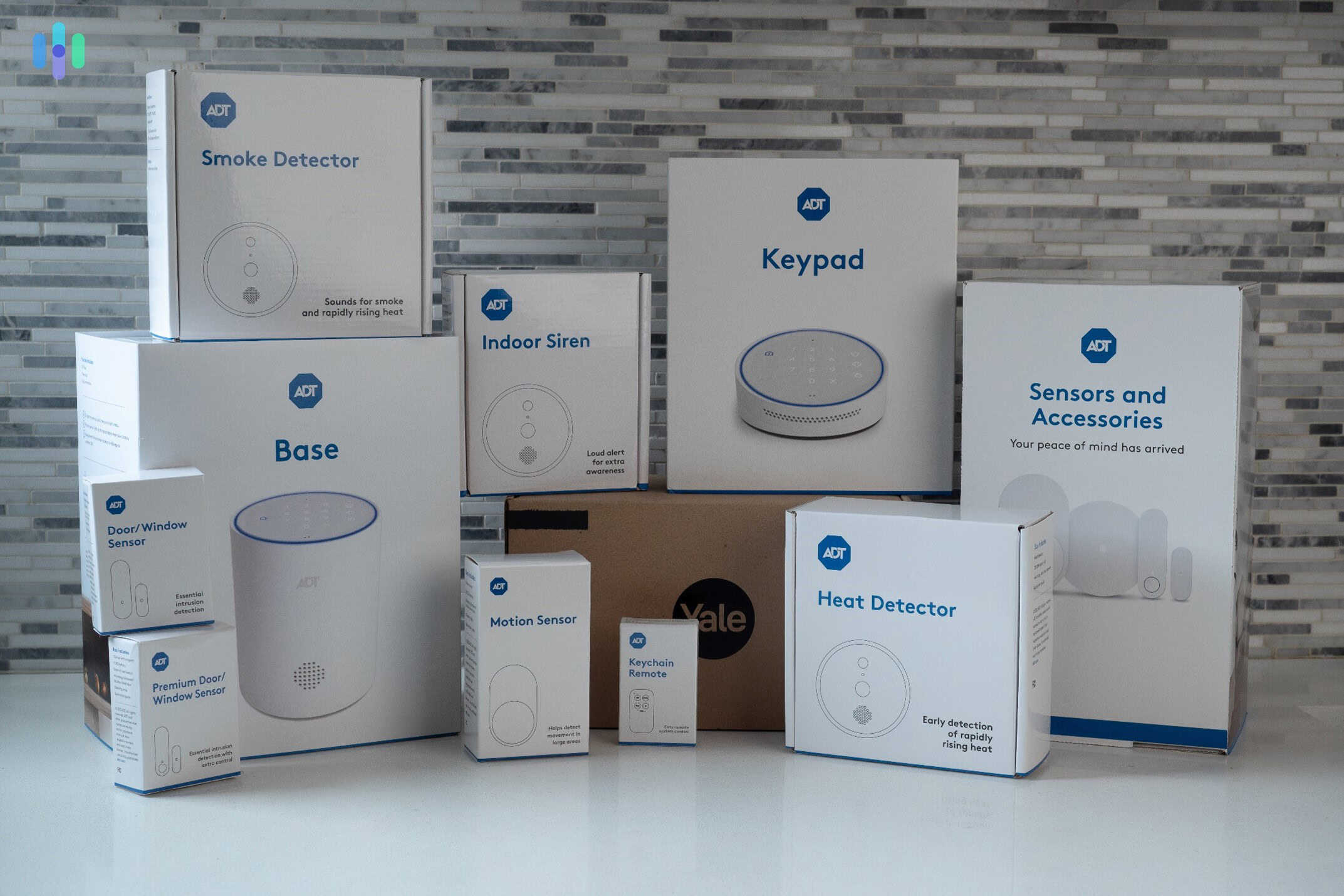
We found it easy to research the devices we needed for our ADT security system. All the devices are categorized into cameras, sensors, life safety, smart home, and accessories. We made a list of what we wanted before calling ADT and organizing our setup. Here’s a rundown of what we bought.
- Base
- Keypad
- Door/window sensors
- Motion sensors
- Glass break sensors
- Keychain remotes
- Video doorbells
- Outdoor cameras
- Indoor cameras
- Smoke detectors
- Carbon monoxide detectors
- Water and temperature sensors
Base
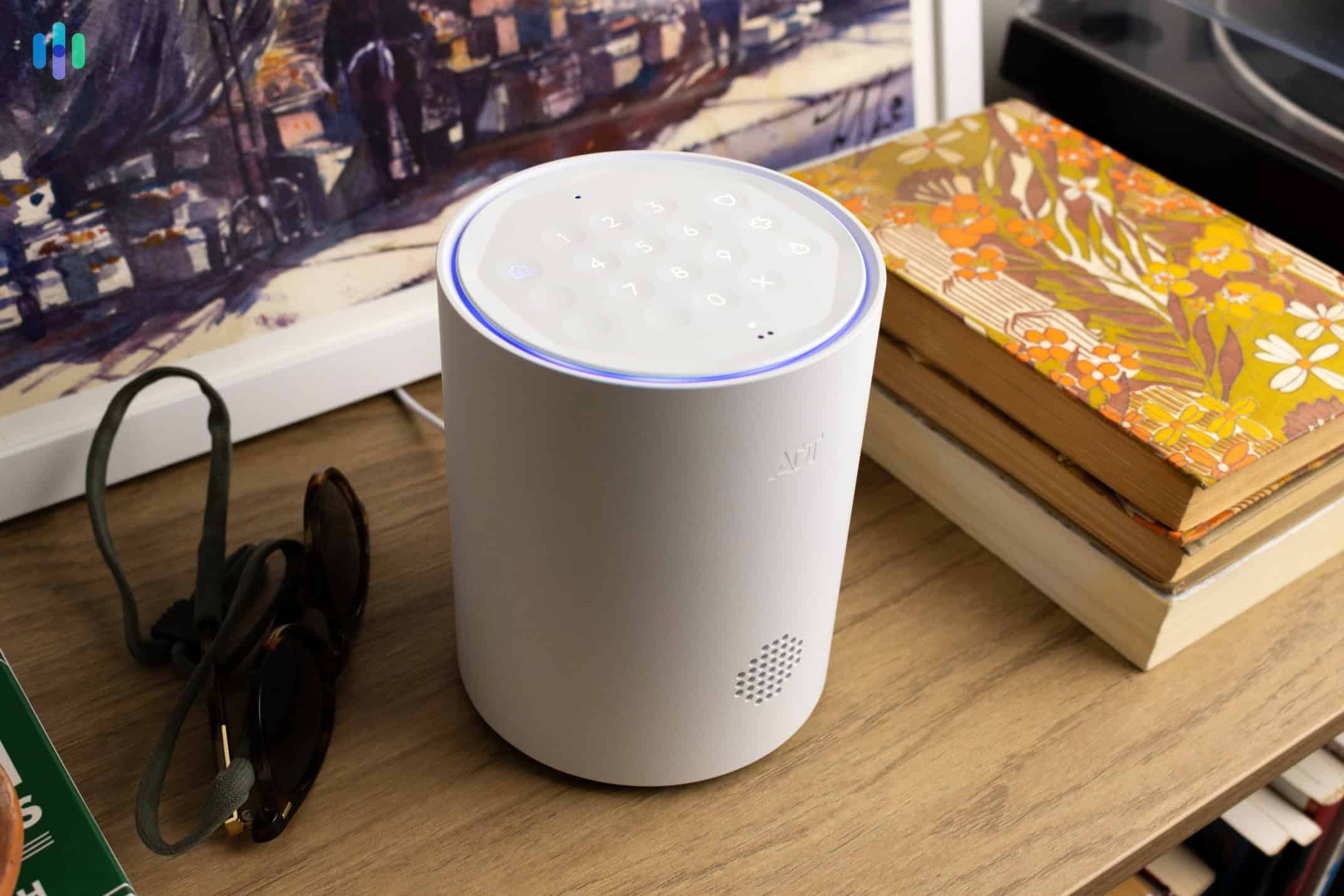
The technician set up the ADT Base first, which makes sense considering all our ADT devices need to connect to it. It has a diameter of about four inches and stands six inches tall. We put our ADT Base on top of a shelf near the front door, which made it easy for us to access the keypad for arming and disarming the system during testing.
That’s all we could use the ADT Base for, considering it doesn’t have a screen. In our Vivint review, we used the Smart Hub touchscreen to access camera feeds and set up automations. With ADT, we used the ADT+ app for these features. ADT’s Base functioned as a communication hub to the monitoring center, and we think it serves that purpose well. It has battery and cellular backup so it can stay connected during outages.
FYI: Our ADT Base connected to AT&T’s 4G LTE cellular network when the Wi-Fi dropped out, so it could still send alerts to the monitoring center. It’s one of the reasons why ADT is on our list of the best cellular security systems.
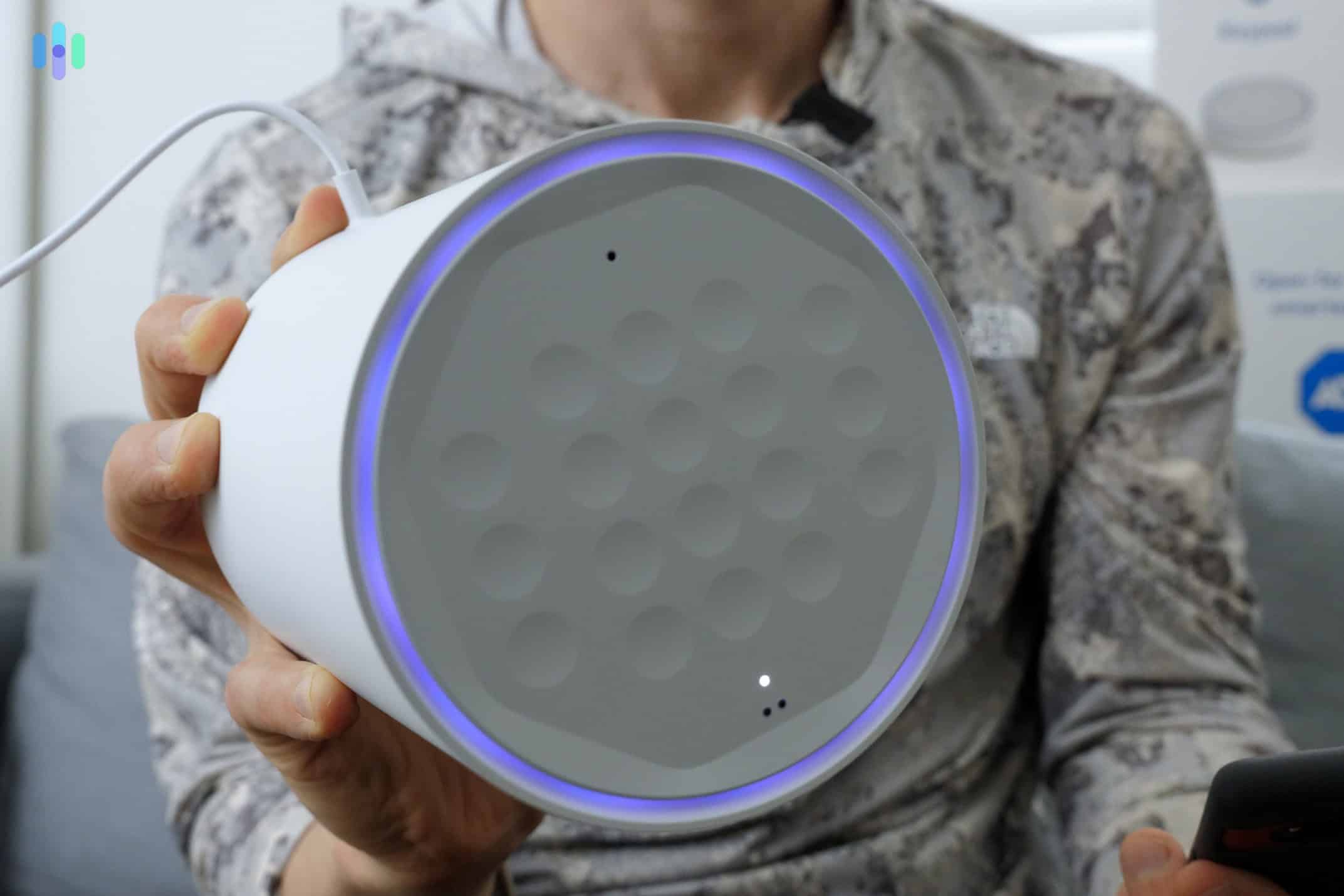
We like that the Base’s ring light changes color based on the system status. It’s helpful if you need a security system for someone hard of hearing. The Base also lit up every time we came near it, thanks to a proximity sensor. The device even has buttons for police, medical, and fire, so you can request help fast.
We did notice the wireless signal range isn’t great, which isn’t ideal for larger homes. If you have a second story, we suggest getting ADT’s Alarm Range Extender. It helps improve the coverage throughout the house, and has its own backup battery and tamper alerts.
Door/Window Sensors
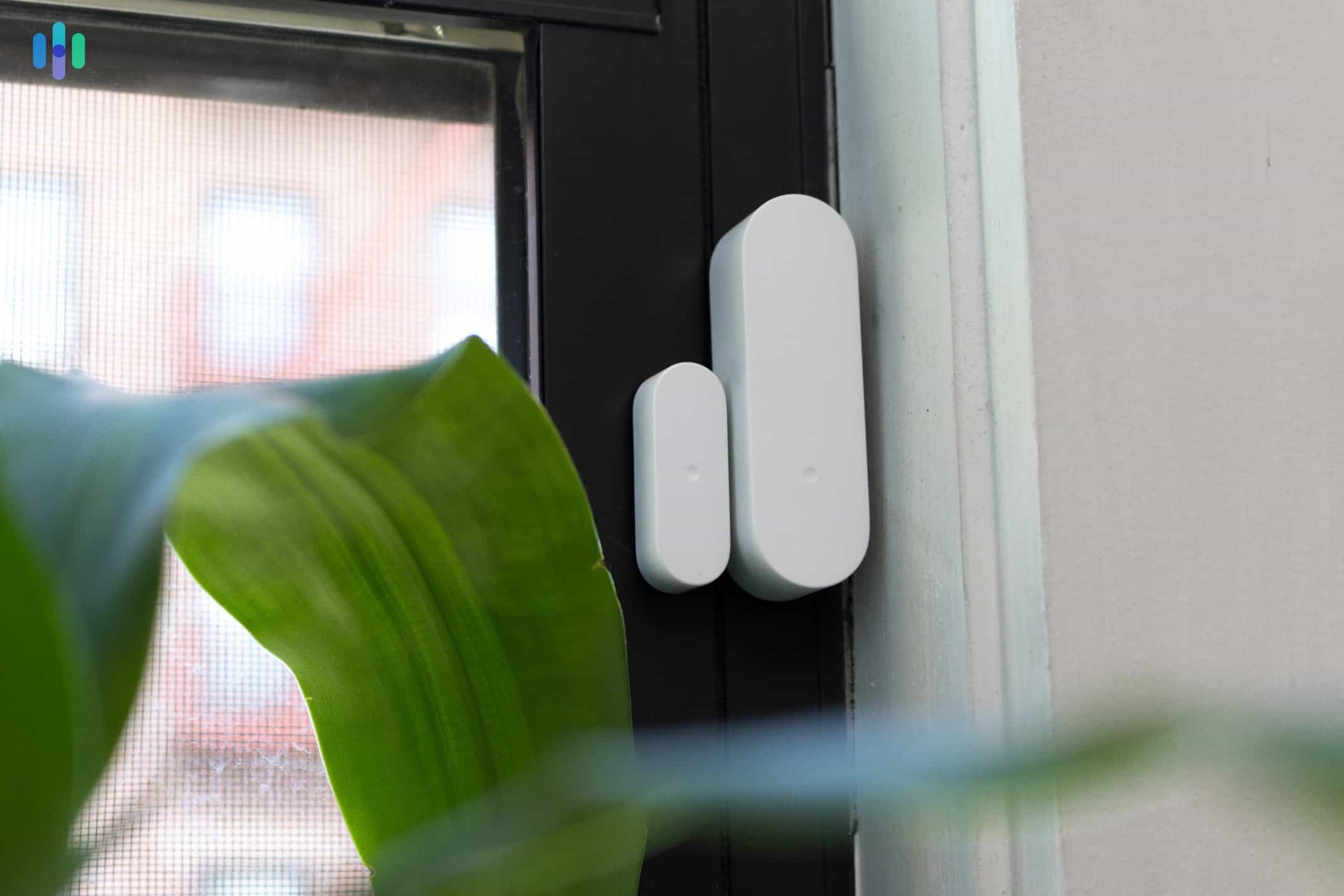
Door/window sensors, or simply entry sensors, monitor the opening and closing of doors. Our technician recommended the best places for our three entry sensors – the front door and two separate windows on the first floor. We recommend getting more than three, though. Interior access doors leading to a garage, back doors, basement entry points, and even second-floor windows could all benefit from entry sensors — more coverage means fewer blind spots.
We did discuss ADT’s premium entry sensors with the sales consultant. They’re double the price, but they detect shock and vibration. That means you’ll get a notification if someone is kicking in a door or breaking a window. You can even attach them to cabinets or drawers that contain valuables. We didn’t need them, though.
Expert Insight: Although the FBI no longer includes this in their newer reports, the last data published in 2019 shows that more than half of reported burglaries in the U.S. involve forcible entry.1
Keychain Remote
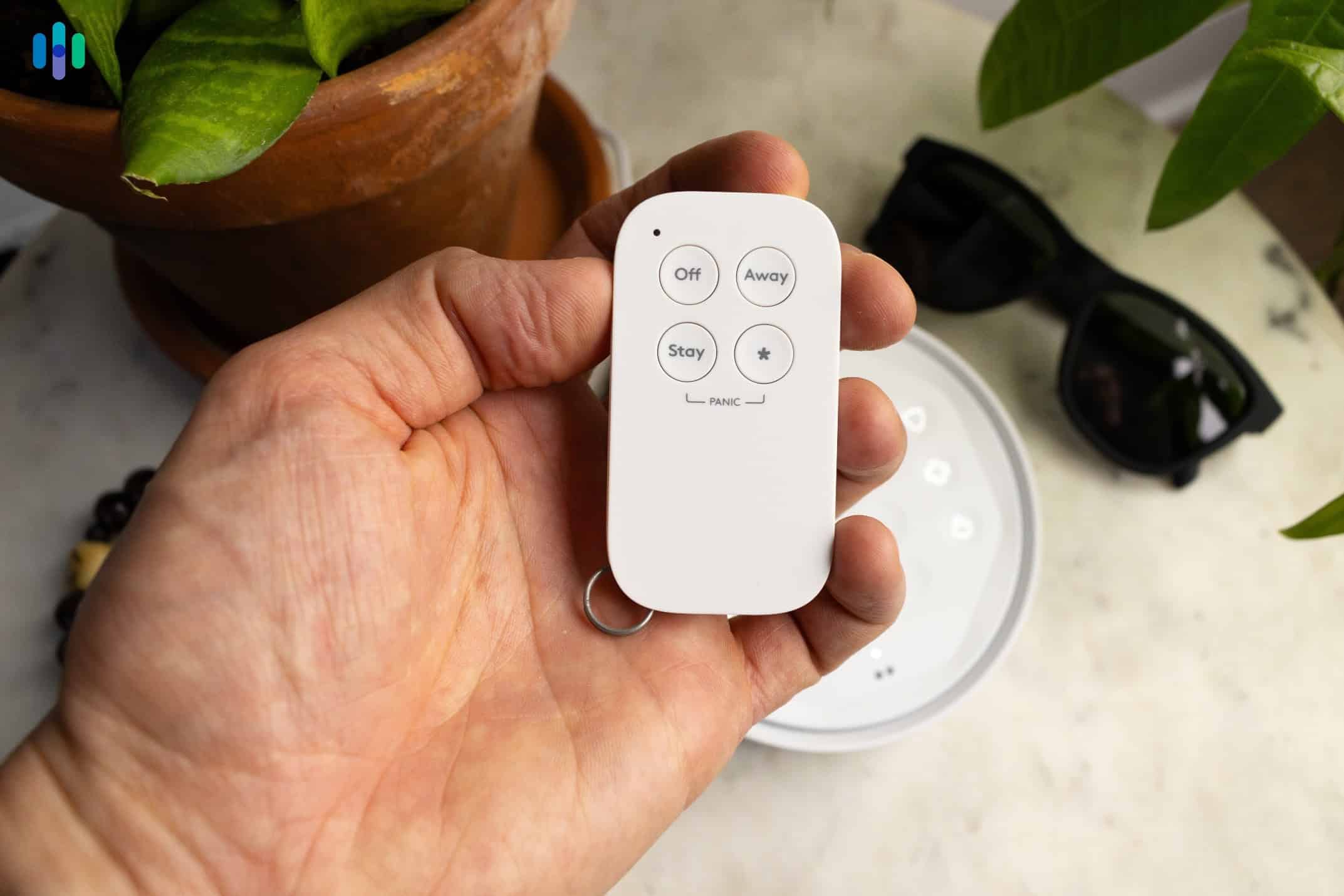
The keychain remote is one of the reasons we recommend ADT as the best home security system for seniors. You can use this device to arm and disarm the system instead of the app or base station. It looks like a garage door opener, but with disarm, arm Stay, arm Away, and customizable help buttons. You can use the help button to call for medical, fire, or police dispatch.
We also like the panic option that connects you to ADT’s monitoring center. Pressing the help and Arm Stay buttons together gets you through. We didn’t use it during our testing, but know it would be life-saving for anyone with medical conditions.

Motion Detector
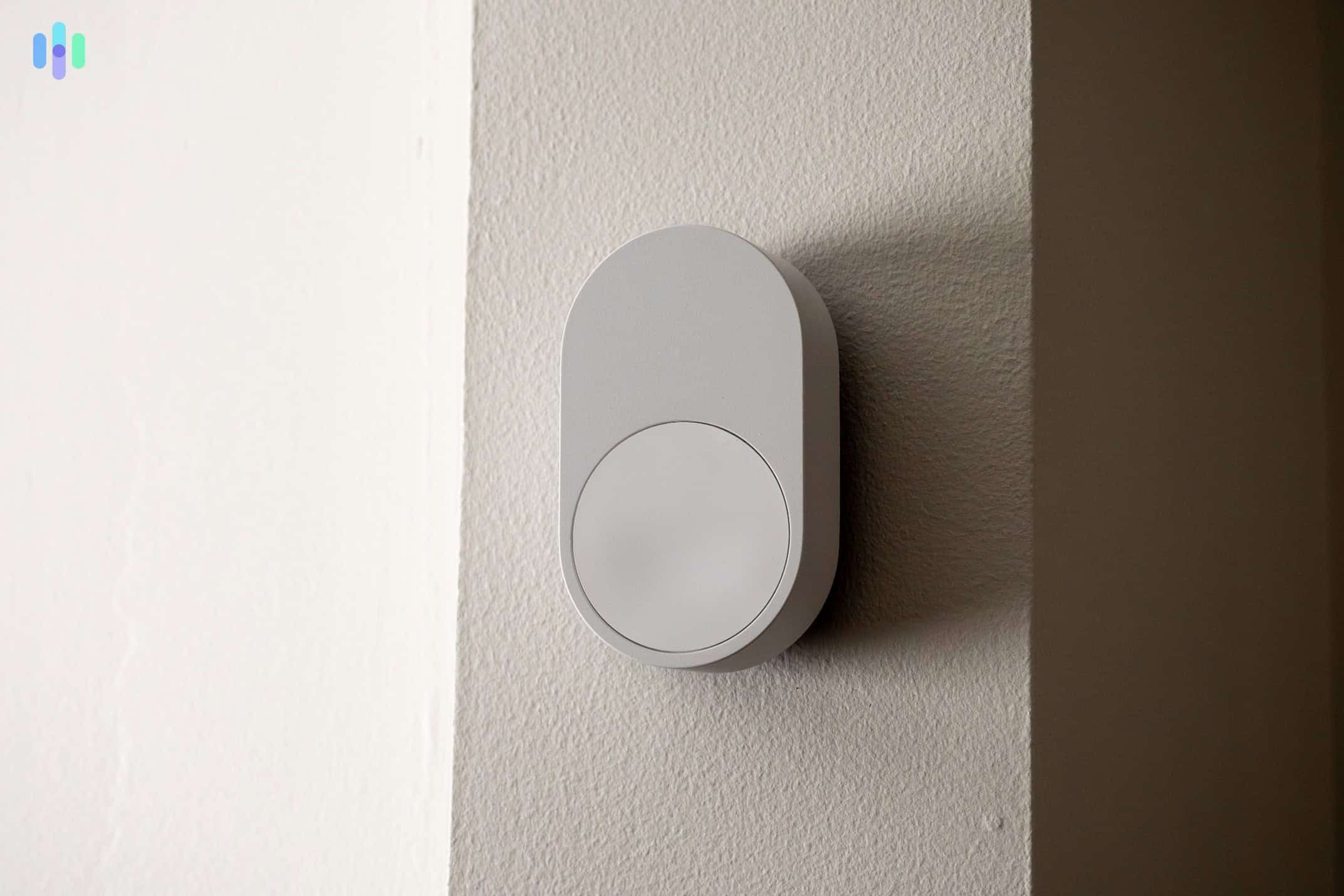
Motion detectors use passive infrared to detect moving subjects that emit body heat, like humans or pets. The ADT motion sensor has a 90-degree horizontal and 50-degree vertical field of view, which was more than enough for our living room.
If you have pets, we recommend adjusting the sensitivity so you don’t get constant notifications when your pets are walking around. We set ours to the lowest setting and it didn’t notice our 65-pound labrador. The technician told us the sensor can even ignore pets up to 85 pounds, which is why we think it’s one of the best home security systems for pet owners.
Pro Tip: It’s easy to adjust the motion detector sensitivity inside the ADT+ app. You can also play with the settings for other ADT devices. We recommend asking your technician for a demo on how to do this.
Glass Break Sensors
ADT’s glass break sensor has a 25-foot range at maximum sensitivity, but if you’re like us and tend to be clumsy with glasses, you can adjust it with four sensitivity levels. Our ADT install technician placed the glass break sensor opposite our sliding glass doors leading to the patio as it works best facing the source.
Smoke Detector
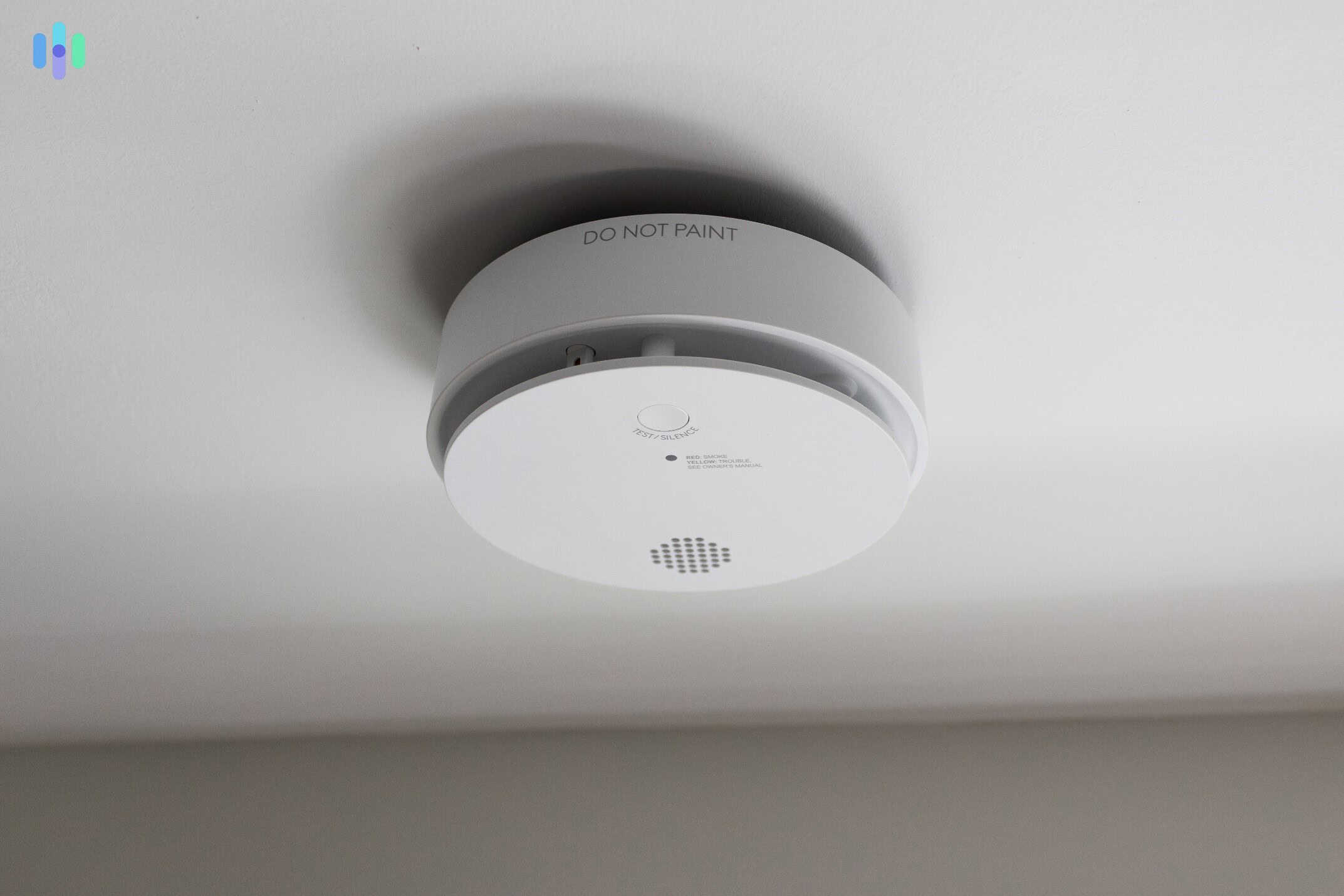
ADT sensors go beyond home security. The Wi-Fi smoke detector protects you from fire. It doesn’t just sound the alarm like most smoke detectors do. When we burned some toast, our smoke alarms triggered a response from the monitoring center as well. Plus, we learned that our three ADT smoke alarms are interconnected; if one sounds, they all sound.
The smoke alarms also connect to the base station, meaning ADT sends smartphone app alerts. We can get notifications no matter where we are, compared to traditional smoke alarms that you need to be in earshot to hear.
Expert Tip: If you’re happy with your current smoke alarms, we recommend complementing them with Nest Cams. Both indoor Nest Cam modes can listen for the sound of smoke alarms and alert you accordingly.
Carbon Monoxide Detector
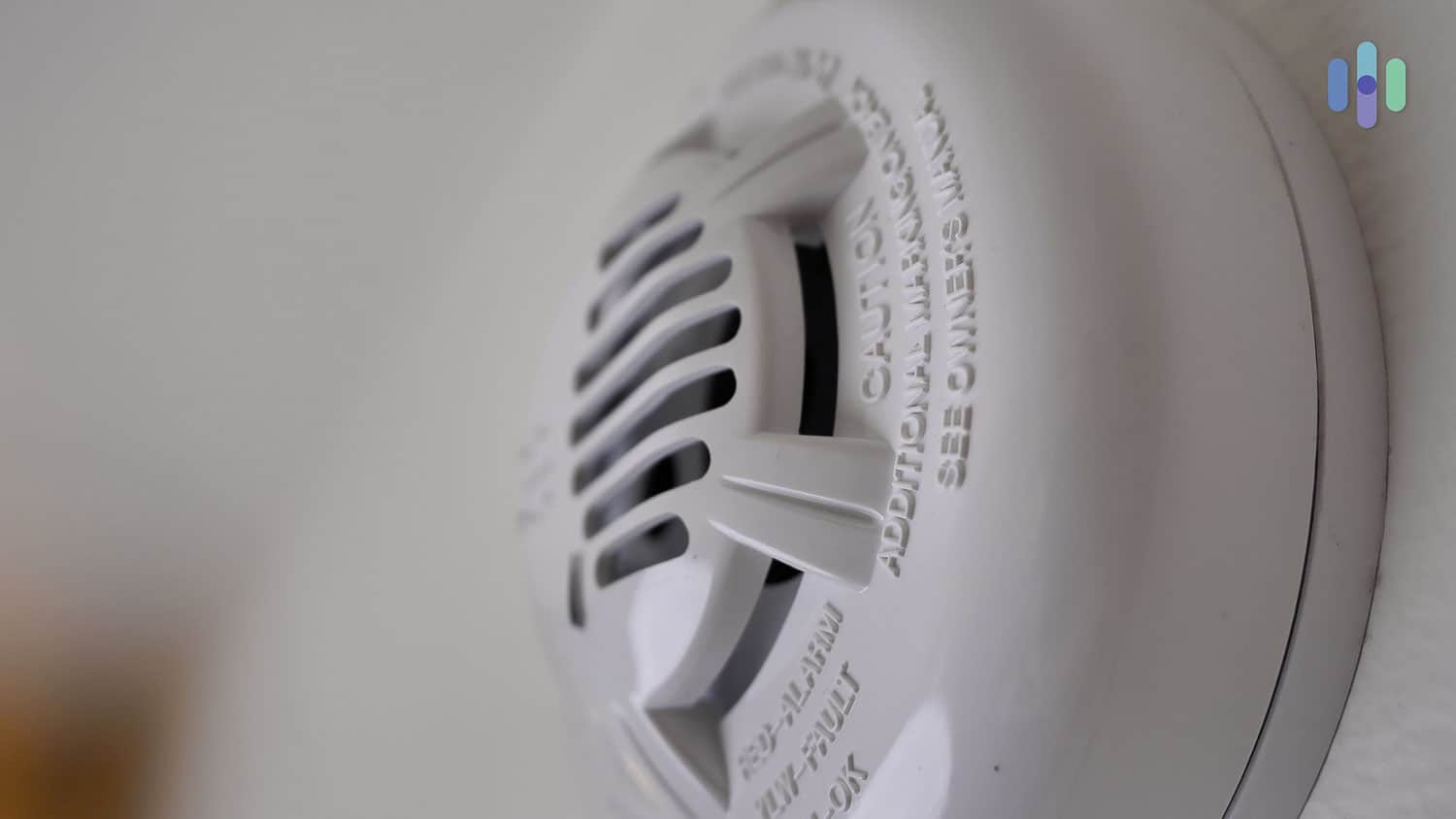
While we installed ADT’s carbon monoxide detector, we couldn’t safely test it. What we do know is that the device is tamper-proof. It also has an LED light to indicate the alarm condition.
When it’s green, everything is functioning normally. A blinking amber light means the device requires maintenance. The light flashes red when it detects carbon monoxide. There is a hush button to silence the device for five minutes in case there’s a false alarm.
FYI: On ADT’s website, you’ll also find smart home products like smart light bulbs, thermostats, plugs, and garage door controls. We didn’t test these devices since they’re not directly related to home security.
ADT Security Cameras
ADT Pro Install security camera lineup features the latest Google Nest range. We got four out of the six, including the Nest Doorbell (battery), one of our favorite video doorbells. Here’s how each security camera performed.
Google Nest Cam Options from ADT
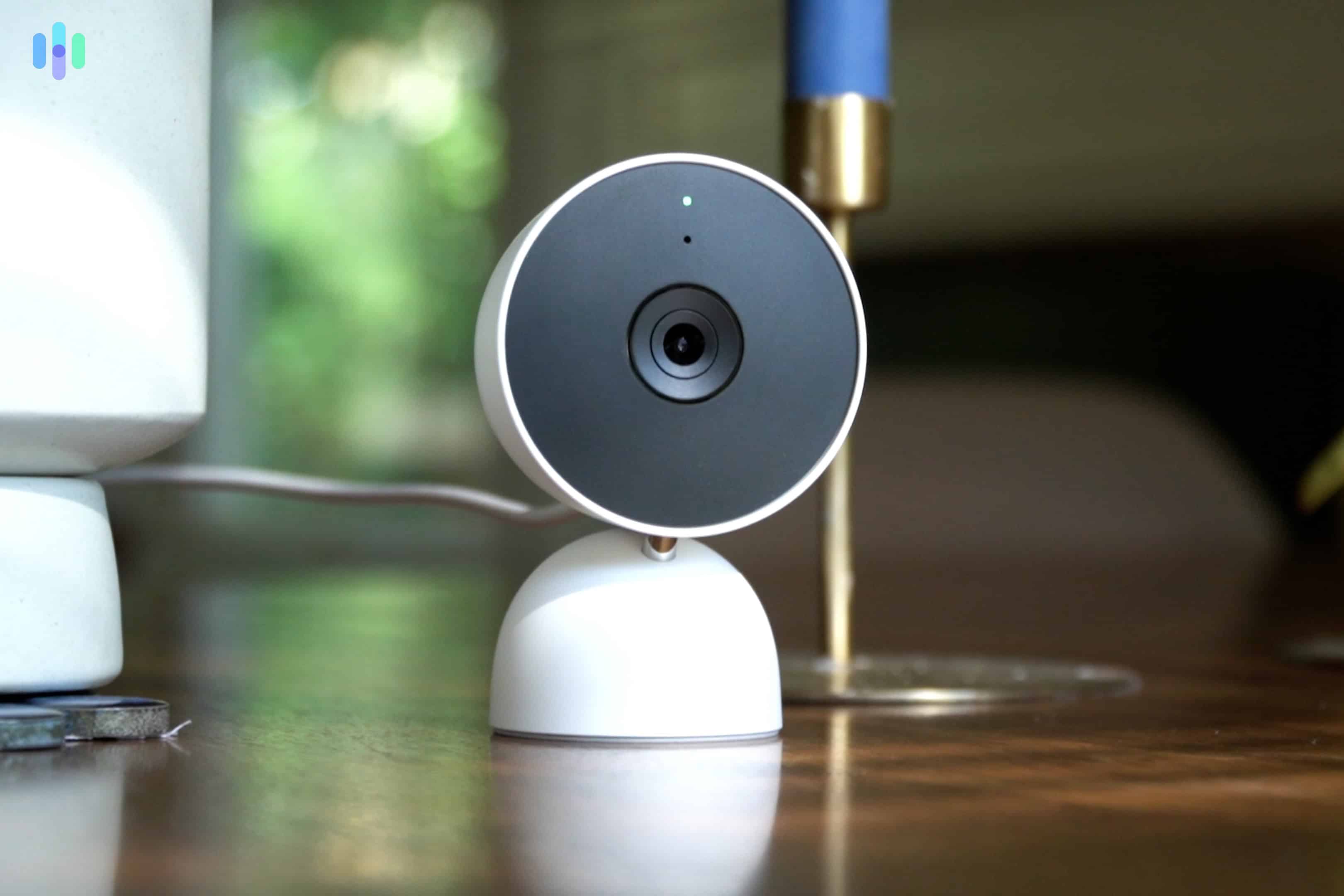
ADT offers the latest Nest lineup, which features 2K video quality and AI integration powered by Gemini. Nest Cams use Gemini for facial recognition. This way you can get personalized alerts from regular visitors like friends, family members, and neighbors. These are the six models you can add to your ADT system:
- Nest Cam (battery): The most flexible option, as it works inside and outside. This device has a 130-degree field of view, 1080p resolution, and AI features for smart detection.
- Nest Cam Indoor (wired): The latest indoor model delivers 2K HDR footage with a 152-degree field of view, which is noticeably sharper and wider than the battery version. It runs on Gemini AI for more accurate person detection and facial recognition.
- Nest Cam with Floodlight: This outdoor camera has two protruding floodlights that you can control via the app, but the whole unit needs to be hardwired into a junction box.
- Nest Cam Outdoor (wired): This wired camera packs the same 2K HDR sensor and 152-degree view as the indoor model, but it’s weatherproof and mounts outside. It doesn’t require a junction box, either. Just plug it into an outlet.
- Nest Doorbell (battery): This doorbell camera features a 145-degree field of view and a 960 by 1280 resolution. Because it’s battery-powered, you don’t need existing doorbell wires.
- Nest Doorbell (wired): The hardwired doorbell camera offers 2K HDR, 166-degree diagonal view, and enhanced night vision. It’s also compatible with most existing doorbell wiring.
>> Learn More: Nest Cam (battery) Review
ADT + Nest Cam – Additional Features
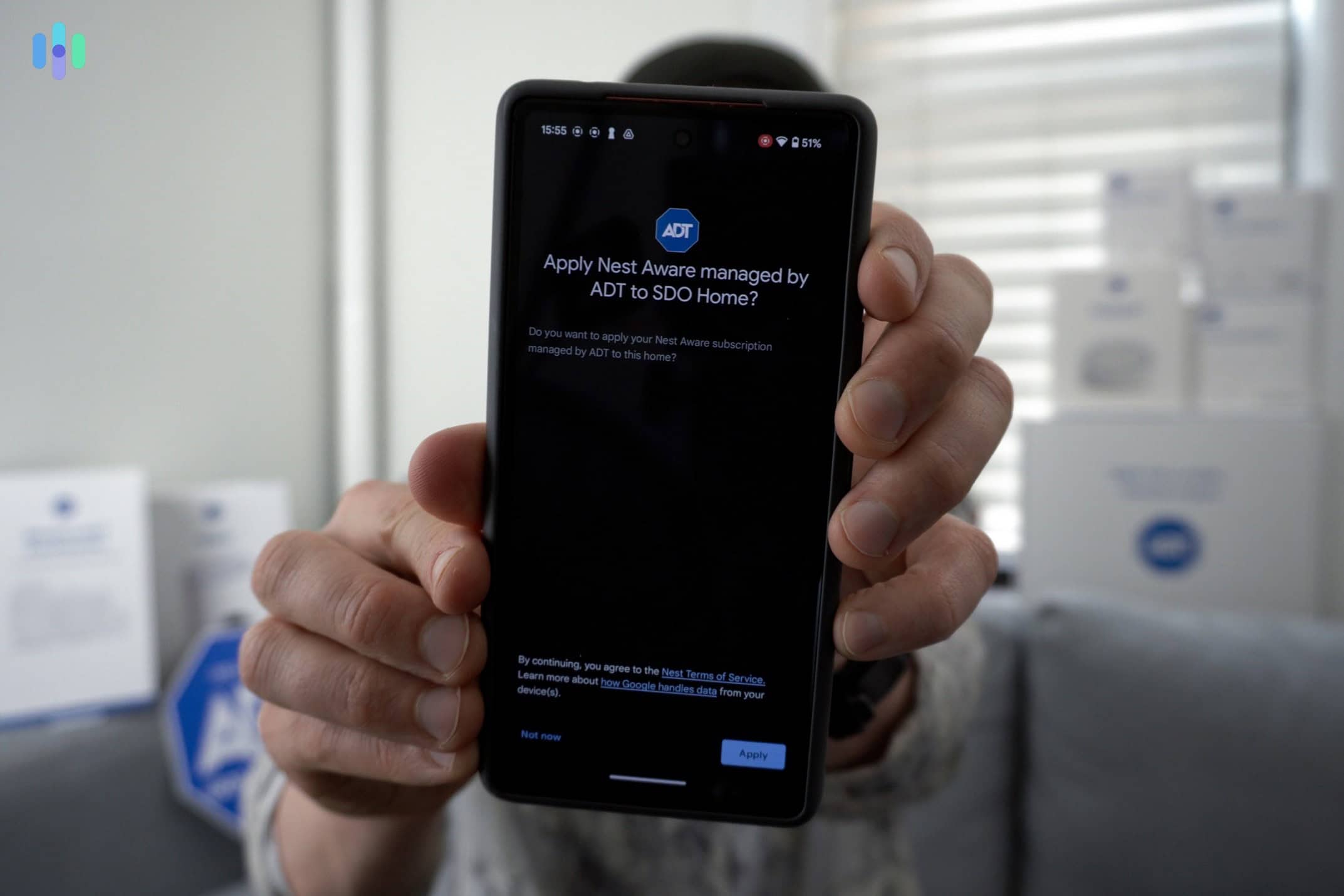
Similar to Vivint packages, you’ll need specific monitoring plan tiers to unlock ADT camera features, and prices start at $49.99 per month. Those plans include 30 days of cloud storage, smart home automation, AI detection, facial recognition, and sound detection — plus all the perks of a Google Home Premium subscription.
Pro Tip: If you already have a Google Home Premium subscription, you can cancel it. Signing up for ADT’s complete plan and linking your Nest Home account gives you access to the same features.
ADT monitoring plans with camera support also include video verification. When an alarm is triggered, ADT monitoring agents check the camera feeds to confirm if they need to dispatch help. This verification typically speeds up police response times.
Another feature included in ADT monitoring plans with camera support is Trusted Neighbor. We spent quite a bit of time testing it. Here’s how it went.
What is Trusted Neighbor?
Trusted Neighbor uses Nest’s facial recognition technology to unlock smart locks and deactivate your security system. You can register and authorize regular guests like friends or family members, and when they approach your home, the system sends their phone a notification to gain access.
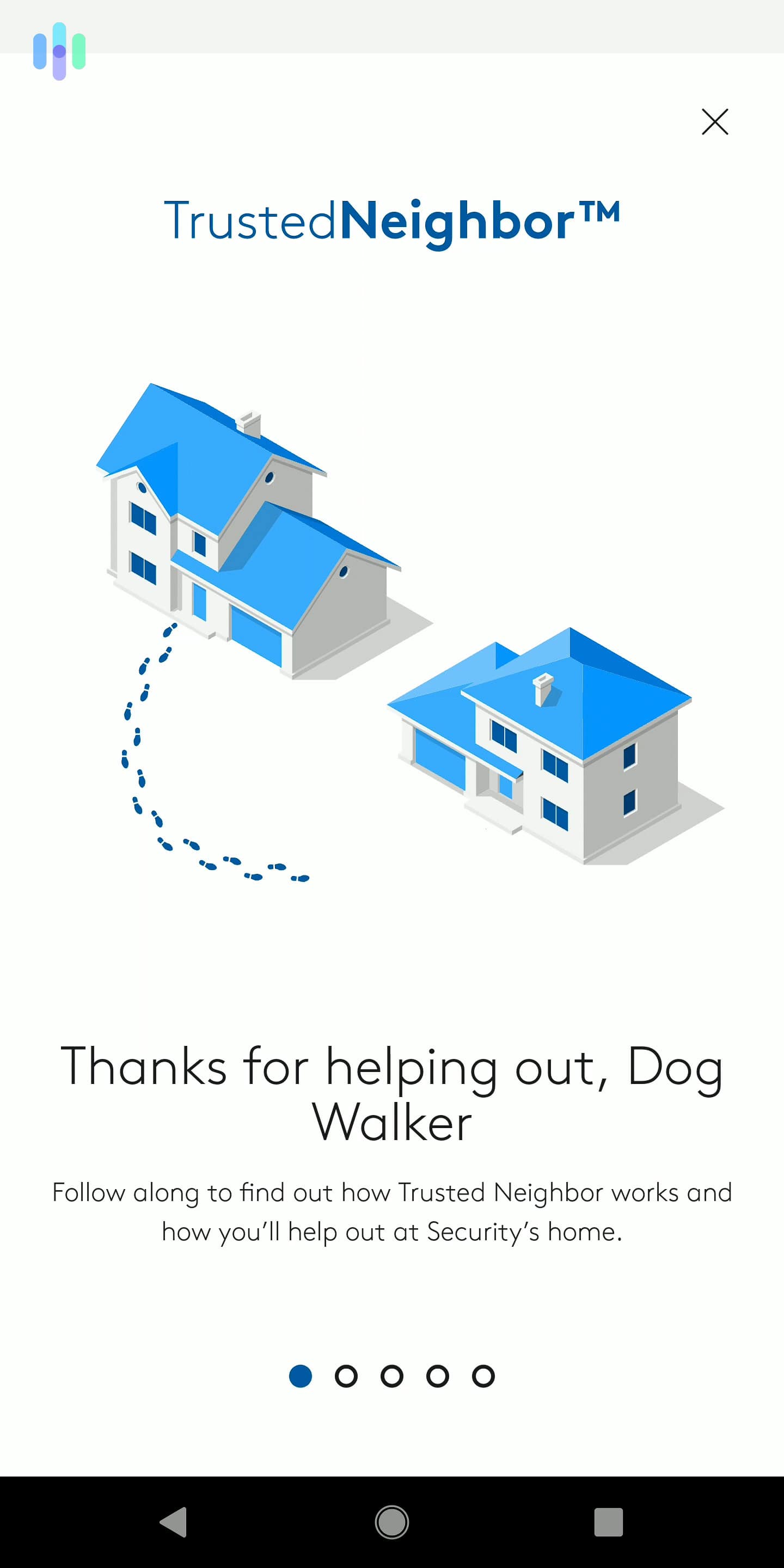
You can set time-based and event-based rules to decide when each ‘trusted neighbor’ is allowed entry. For example, we set ADT to let our babysitter into the house between 4 and 5 P.M. to look after the kids. For event-based rules, you can set your system to only let people in when your smoke alarms detect fire – to let your pets out, for example.
FYI: Trusted Neighbor is a great feature, but we prefer intruder deterrents like SimpliSafe’s Active Guard Outdoor Protection. It lets SimpliSafe agents access the camera feed to scare off intruders via the two-way speaker.
>> Keep Reading: SimpliSafe 2026 Review
Home Automation with ADT
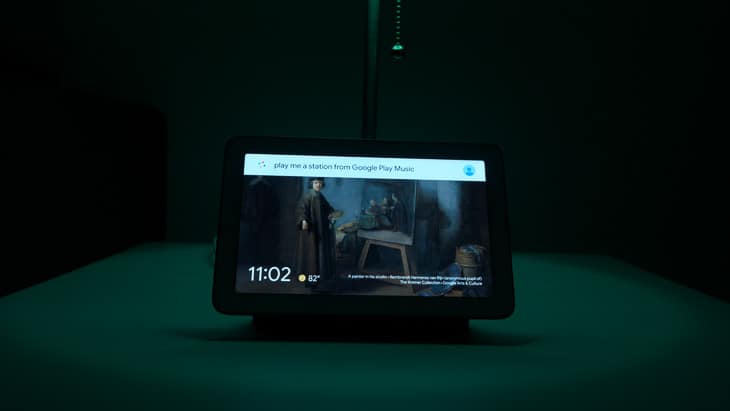
We started our testing with voice commands, using Google Assistant voice controls via the Nest Hub we reviewed recently. All we had to say was “arm the system” and it was done. We also used voice commands to lock the front door and adjust the temperature on the Nest Thermostat. Don’t stress if you’re an Alexa household. ADT also works with Alexa-enabled devices.
Pro Tip: For smart devices that integrate directly with Google Assistant and Alexa, we recommend controlling them directly instead of via ADT. It will save you time having to add “ask ADT to…” to the start of commands.
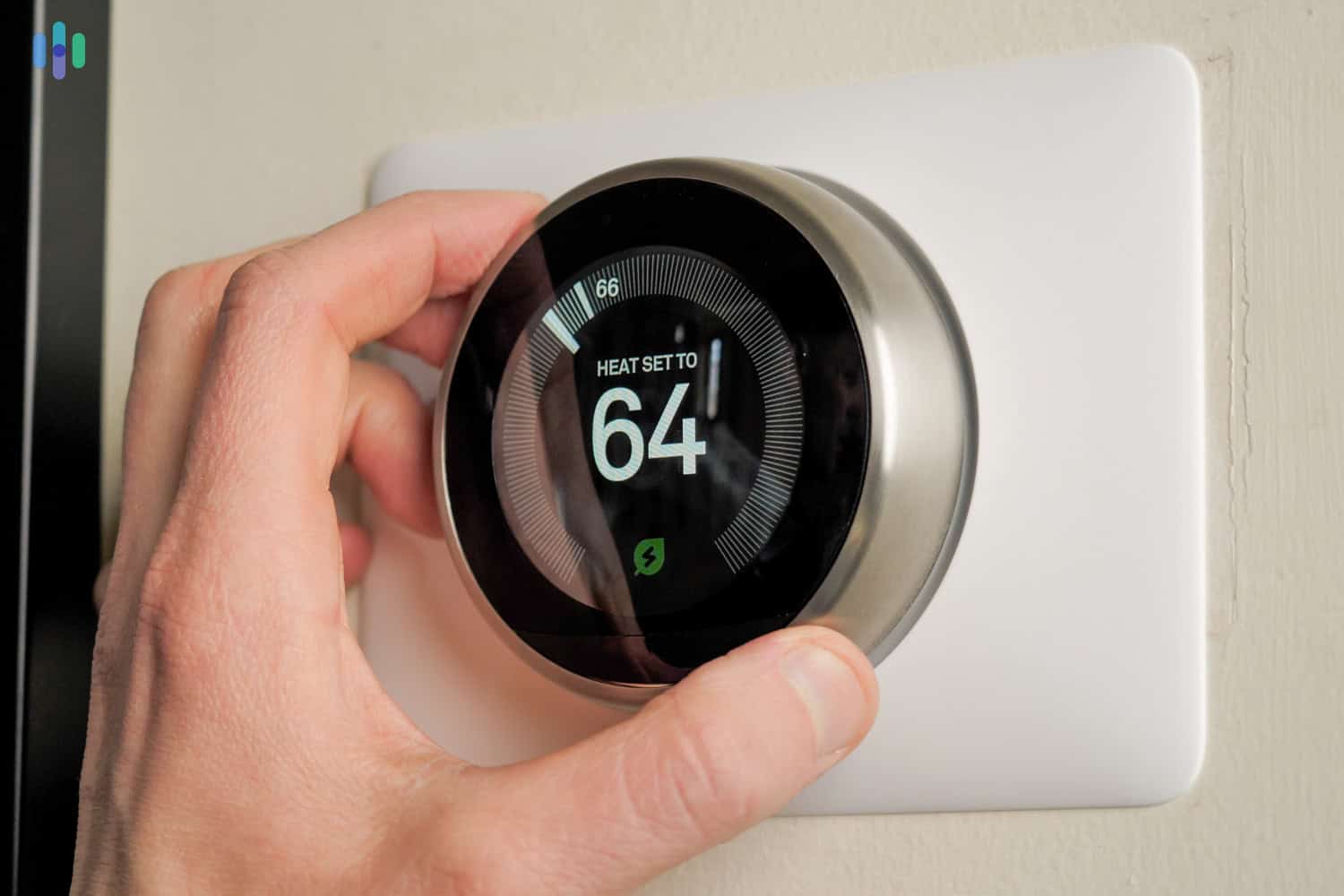
ADT’s automation rules are similar to IFTTT in that you need to set a trigger, action, and condition. In the ADT+ app, it was easy for us to set up rules for our lights to turn on when motion is detected and for cameras to record when the front door opens. This type of functionality puts ADT in the same category as Abode and Vivint as one of the best smart home security systems.
>> Compare: Abode 2026 Review
We also recommend setting up the Home | Away feature. It uses your phone’s GPS to arm the system when you leave the house and disarm it when you’re walking towards the front door. Some members of our household often forgot to arm the system, so this feature was especially useful. We used a similar feature while testing Frontpoint. Check out our ADT vs. Frontpoint comparison to see which one worked better.
ADT’s Monitoring Plans
ADT Pro Install customers are required to sign up for professional monitoring, which we actually recommend for comprehensive protection. While you’ll pay a monthly fee, you’ll get 24/7 protection, smart home integrations, and video support. For ADT Pro Install, monitoring starts at $49.99 per month, with the final price determined by your equipment and features after a consultation.
That said, ADT’s tailored sales process comes with a trade-off. The upside is that every system is built around your specific needs rather than a one-size-fits-all package. The downside is that if you’re on a budget, you’ll need to get on a call with a sales rep to find out what you’ll actually pay — and ADT’s sales teams can be persistent. It’s worth going in with a clear sense of what you need and what you’re willing to spend.
>> Check Out: Best No-Monthly-Fee Home Security Systems
We think ADT’s monitoring is worth the $49.99 starting price, even though it sits at the higher end of the industry. What you’re paying for is access to one of the most reliable professional monitoring networks available — six redundant centers, response times averaging 20 to 30 seconds, and features like video verification and SMART Monitoring that most competitors can’t match at any price point. When you add Google Home Premium for facial recognition and 30 days of cloud storage, the value proposition gets even stronger.
ADT’s monitoring prices are not the cheapest around. As you can see in our Cove review, their monitoring prices start at $22.99 per month. SimpliSafe’s plans offer more flexibility as most include support for security cameras as well as advanced monitoring features for a reasonable price. But if you’re serious about home security and want a professionally installed system backed by industry-leading monitoring, ADT is our top recommendation. If you want to offset some of the costs, we recommend holding out for an ADT deal, which happens more often than you think.
Our Experience: ADT’s SMART monitoring feature sends text messages to all household members within 10 seconds of an alarm. We received a link to a group chat where everyone could decide to confirm or cancel the alarm. If no action is taken within 30 seconds, someone from ADT will call to check in.
| Secure | Smart | Complete | |
|---|---|---|---|
| 24/7 intrusion, fire, emergency monitoring | Yes | Yes | Yes |
| SMART Monitoring | Yes | Yes | Yes |
| ADT mobile app | Yes | Yes | Yes |
| Smart home integration | No | Yes | Yes |
| Google Home Premium | No | No | Yes |
| Video verification | No | No | Yes |
| Trusted Neighbor | No | No | Yes |
| Price | Starting at $24.99 | Starting at $34.99 | Starting at $49.99 |
We think the Complete plan offers the best bang for your buck since it includes a Google Home Premium subscription, which is normally $10 a month. You can learn more about the features in our Google Home Premium guide.
FYI: You can add a Quality Service Plan (QSP), an extended warranty plan for your equipment, starting at $7 per month. Just keep in mind that the cost of the QSP scales with the number and type of devices you have.
Is ADT Monitoring Worth It?
We think ADT monitoring is worth it for two reasons: speed and reliability. While testing response times, we always heard from ADT within 30 seconds, which is the industry average. Some systems respond faster, but this length gave us enough time to cancel false alarms, while not being long enough for burglars to grab our stuff and bolt.
Plus, ADT runs six fully redundant monitoring centers. No other security company offers this type of infrastructure. This guarantees that someone is always available to respond to an alert from your system.
Our Experience: ADT’s SMART monitoring feature sends text messages to all household members within 10 seconds of an alarm. We received a link to a group chat where everyone could decide to confirm or cancel the alarm. If no action is taken within 30 seconds, someone from ADT will call to check in.
Our Installation Process with ADT
ADT Pro Install requires professional installation for all systems. We did have to call ADT to finalize our purchase and organize a time for a technician to set it up — the whole scheduling process took about 15 minutes, and we had a technician at our door within two days.
The technician arrived on time with all the equipment pre-configured and ready to go. Before touching anything, he did a walkthrough of our home, asking about entry points we were most concerned about, whether we had pets, and where we spent most of our time indoors. That conversation shaped where everything ended up — our motion sensor landed in a corner of the living room, and our Nest Doorbell got mounted slightly off-center from the door to capture a wider angle of the front walkway. Both turned out to be the right calls.
The full installation took just under two hours. He ran us through arming and disarming the system, showed us how to add household members to the ADT+ app, and walked us through setting up our first automation rule before he left. When we had a question about the Nest Cam placement a few days later, a quick call to ADT’s support line got it sorted in minutes.
Our Experience: Installing Nest Cams and sticking sensors to walls is easy, but we prefer using ADT’s professional installation service. The technicians know the best spots to place equipment, and they show you how to get the most out of the system.
ADT Apps
When searching the App Store and Google Play, you’ll notice multiple ADT apps. Be sure to download the ADT+ app. The ADT Pulse and ADT Control are for ADT’s previous generations of security systems.
Our technician showed us how to use ADT+ to set up, control, and monitor our equipment. We even learned how to add compatible third-party devices. One of the first adjustments we made was to the motion detector sensitivity after we started getting a lot of false alarms. We also shared video clips from the app to family members to let them know packages arrived.
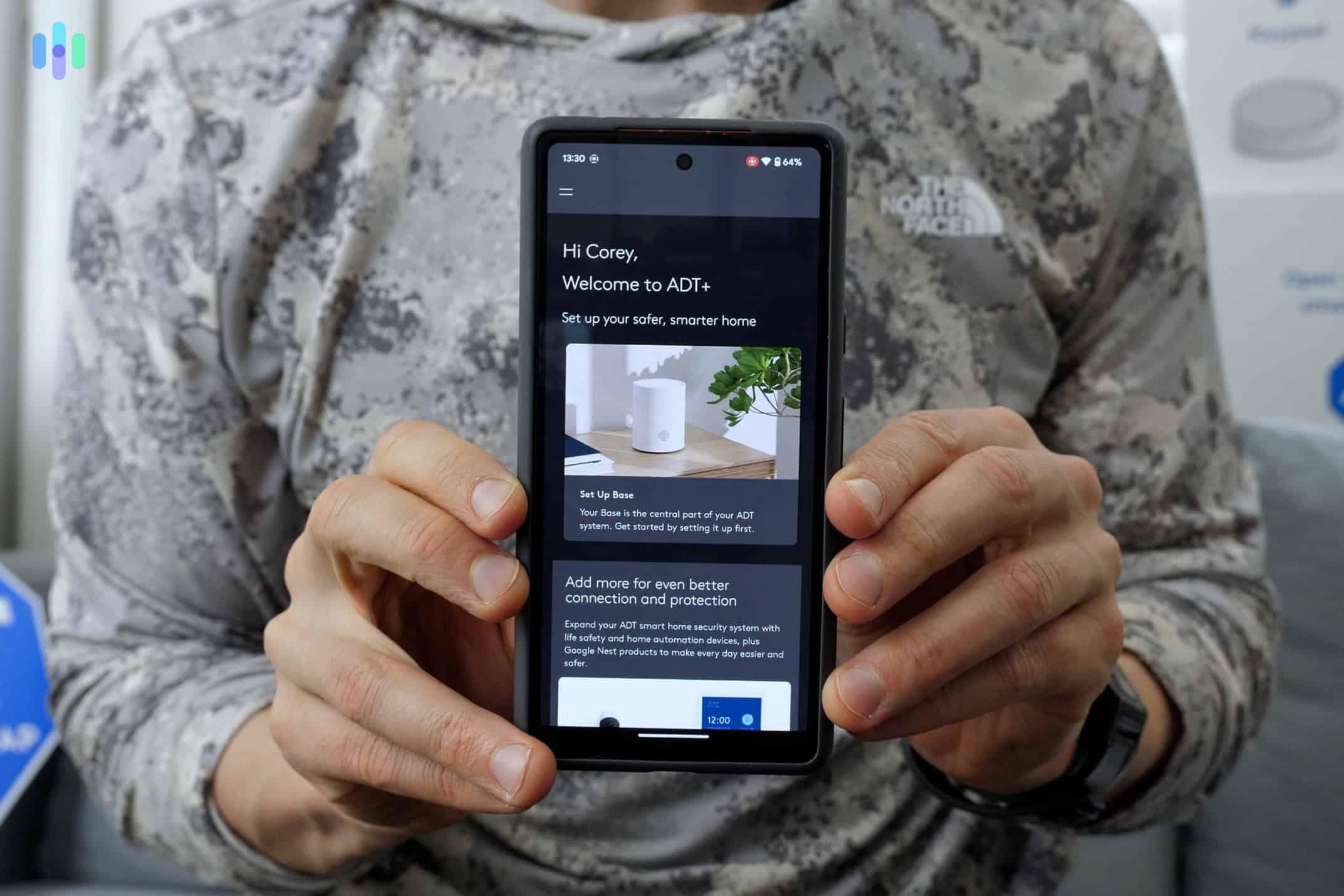
ADT+’s greatest feature is how it’s incorporated Google Nest. You can use it as a substitute for the Nest App, so you’re not switching between screens to manage different devices. We could view Nest Cam footage and recordings, control our Nest smart home devices, and manage the security system including features like Trusted Neighbor.
ADT’s Customer Support
ADT’s phone, email, and live chat services are available 24/7, but we found it easier to use the knowledge center. It has the answers to the most common questions, as well as guides on how to set up and customize device settings.
The last time we used the live chat service, the agent sent us to a page that didn’t have anything to do with our question. We had a better experience with the call center, which talked us through how to resolve an issue with the Hub. Despite the mixed service, there are worse security systems around.
Expert Tip: We recommend using the support center to find the answer to your question. On the home page, click the support menu option in the upper right-hand corner. If you can’t find the answer, the live chat button is available in the bottom right.
Find out if ADT can protect your home like other home security systems
We tested ADT and compared it side-by-side with other brands to give you the full picture.
Recap of the ADT Security System
ADT is not the most flexible home security system around, but it’s reliable. The company offers one of the best professional monitoring services in the industry and is backed by state-of-the-art equipment like Google Nest cameras. The result is a user-friendly system that anyone will be comfortable operating and managing.
There are cheaper home security systems out there that offer more flexibility, self-monitoring plans, and touch-screen controllers. We won’t argue with that, but we believe there is a reason ADT has been in business over 150 years and continues to hold its top spot on our best home security system list.
ADT FAQs
-
Can I use ADT without professional monitoring?
ADT Pro Install systems require professional monitoring — self-monitoring is not an option for professionally installed systems. We recommend it anyway, as professional monitoring is what makes ADT one of the best security systems on the market. If you’d prefer a self-monitoring option, ADT Blu offers that flexibility.
-
What equipment comes with an ADT security package?
You can build an ADT system from the ground up or choose one of its equipment bundles. Pricing varies depending on your chosen package and any current promotions — check ADT’s website for the latest deals.
-
How much does ADT cost per month?
For ADT Pro Install, monitoring starts at $49.99 per month. For ADT Blu, plans start at $9.99 per month for camera-only self-monitoring.
-
Does ADT require a contract?
ADT Pro Install requires professional installation for all systems. A monitoring contract is not required if you pay for your equipment upfront, but if you finance your equipment — which can be up to 60 months — you’ll need to sign a contract for the duration of the financing term.
-
Does ADT work with smart home devices?
ADT integrates with compatible smart locks, light bulbs, and thermostats. You can also connect it to Alexa and Google Assistant for voice commands, as well as other Z-Wave products on the market.
-
FBI. (2019). Burglary.
https://ucr.fbi.gov/crime-in-the-u.s/2019/crime-in-the-u.s.-2019/topic-pages/burglary